




















Important KPIs To Track Your SEO Performance
SEO is a data-driven field, as SEO professionals and their managers need to understand how their efforts are affecting traffic to their company's pages. KPIs in SEO can help these professionals understand their performance, how to improve weak areas and how to optimize already strong pages.


If you're an SEO professional, you may benefit from learning which KPIs are most relevant to your business. In this article, we explain what KPIs in SEO are, discuss why they're important and explore some of the most important SEO KPIs to track.
What are KPIs in SEO?
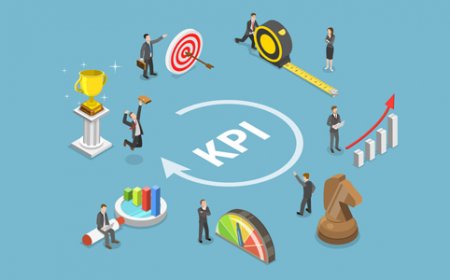
KPIs in SEO are the key performance indicators that show how your SEO work is performing. They usually include important data that helps staff evaluate how effective their SEO work is. Companies may use KPIs to track the performance of an individual, a team or an entire department. There are many different types of KPIs you can use to evaluate SEO performance and provide insight into specific areas of SEO work. Generally, a team has specific KPI goals and can track performance on those goals over time.
Why are KPIs important for SEO?
KPIs are important for SEO as they indicate how effective SEO work has been and if any changes need to be made. These metrics can tell a company if the right types of customers or clients are being reached and how the business is ranking in search engine results.
KPIs can also indicate how people are reacting to certain types of content, how long people stay on the business' website and what type of return on investment is coming from SEO efforts. Without tracking KPIs, an organization is unlikely to know if SEO efforts are working or how to improve traffic.
11 important SEO KPIs to track
There is a variety of SEO KPIs a business can track, and the best choices for a particular organization can vary depending on its needs. Here are some of the most important SEO KPIs to track:
1. Return on investment
Return on investment (ROI) is a KPI that tracks how much you've invested into SEO and how much revenue your business has earned from your SEO efforts. ROI can take a while to evaluate fully, however, as it may take up to a year for the effect of your SEO on revenue to be clear. Tracking ROI should usually include consideration for the amount of time it may take for the metric to be accurate.
2. Organic click-through rate
Organic click-through rate (CTR) shows how many people are clicking on your link when they search for a term and the results include a page on your site. This is evidence of how well your link title and its associated metadata appeal to searchers for a search term. You can track this KPI as a percentage of people based on the query itself or the page on your site.
3. Organic conversion
Organic conversion is the amount of business that develops through your site based on your SEO efforts. These might be leads for clients or sales of products or whatever type of business is relevant for your industry and type of company. The best way to evaluate your conversion rate based on your SEO efforts is to track conversions before SEO work began and create a goal for future conversions.
4. Search rankings
One of the primary goals of SEO is to get your pages on the first page of search engine results in order to be visible to the most searchers. For many organizations, that means tracking how your most important keywords are performing in search rankings. There are tools that can help you track many different keywords, how they're performing and any changes that may be happening.
5. Search visibility
Search visibility is defined by the number of times your website is shown in search results and receives search impressions. This only means someone has seen your link, but it can help you understand how many people are viewing your link for specific keywords. This can help you target your efforts to keywords that need help or to boost successful keywords.
6. Bounce rate
Bounce rate measures how many viewers leave your site after looking at a particular page, both in terms of the number of viewers and a percentage of viewers. It often also tells you which pages a user is most likely to cause a site exit and which areas to improve on your site. Researching average bounce rates for similar websites can help you set a KPI goal, and if your bounce rate is higher than that, you can determine how you want to reduce it.
7. Page speed
A SEO KPI that's easy to track is your page speed. There are many things that can slow down how fast a page loads, which may include large image sizes or a server that's lagging. Users may decide to exit your site more quickly if they are unhappy with the speed of your pages, so evaluating page speed regularly to ensure it's optimized can improve your bounce rate.
8. Backlinks
Backlinks are links that reference your site's pages, such as links from other websites or search engines. Backlinks are extremely important in how Google ranks links, so tracking backlinks can help you determine ways to improve your search engine ranking.
Although backlinks may be one KPI for your organization, you can track data such as how many backlinks your site has, how many other domains are referring to your site, how many new backlinks you've earned and any links from sources that may negatively impact your search engine ranking.
9. Branded and non-branded traffic
Branded traffic is traffic from users who are specifically searching for your brand with their keywords. They might search for your company name, a product name, a service name or anything else that is specific to your brand. Non-branded traffic is traffic from users who are searching with keywords that do not directly relate to your brand but may be present on your site. This data can help you evaluate what is driving the most traffic to your site.
For instance, if your company name is Jones Architecture and a user searches for "Jones Architecture," that's branded traffic. If a user searches for "architectural design" and finds your site, that's non-branded traffic.
10. Crawl errors
Crawl errors are errors that occur when a search engine's technology is accessing or reading your site, which is often referred to as "crawling your site." A crawl error can impact if your page shows up in search engine results at all, so tracking and correcting crawl errors is very important for SEO. Ideally, your site would have no crawl errors, although for a very large site correcting these errors may be a work in progress.
11. Average time on page
A user that spends a lot of time on a page or your entire site is likely more engaged in your content than a user who quickly exits. They are also often more likely to become a conversion by asking for further information or making a purchase. If you want to increase the average time a user spends on your page, you can work on creating more interesting content or reviewing how your competitors perform and determining what keeps users on their sites.
Source: https://www.indeed.com/career-advice/career-development/kpi-in-seo
What's Your Reaction?
 Like
0
Like
0
 Dislike
0
Dislike
0
 Love
0
Love
0
 Funny
0
Funny
0
 Angry
0
Angry
0
 Sad
0
Sad
0
 Wow
0
Wow
0